
Seen and Believed, Part 2: What Lupus and Hashimotos reveal about invisible illness at work
Even though she has a sedentary job, Rachel Hill knows it's going to be along day. "The room feels freezing, even though everyone in the office doesn’t feel the same. When someone opens a window or puts on a fan, your bones ache even more and it makes all your symptoms ten times worse. You struggle to get out of your chair and walk to the toilet."
Rachel's story shows how an illness that is hard to see becomes hard to manage at work, and why the responsibility for change belongs with workplaces as much as with individuals.
This is Part 2 of our Invisible Disabilities Week series. In Part 1, “Seen and Believed: How Invisible Illness Keeps Autoimmune Disease in the Workplace Shadows,” Lelainia Lloyd, an Ambassador with the MS Society of Canada, described hiding her disability when she volunteered at the 2010 Winter Olympics.
Dr. Adam Buntzman, Scientific Advisory Board Member at Praespero, explained the pattern behind her choice. “Secret suffering is the axle of this vicious cycle of low awareness,” said Dr. Buntzman. Here we look at two common invisible illnesses: Hashimotos and Lupus.
Hidden in the thyroid
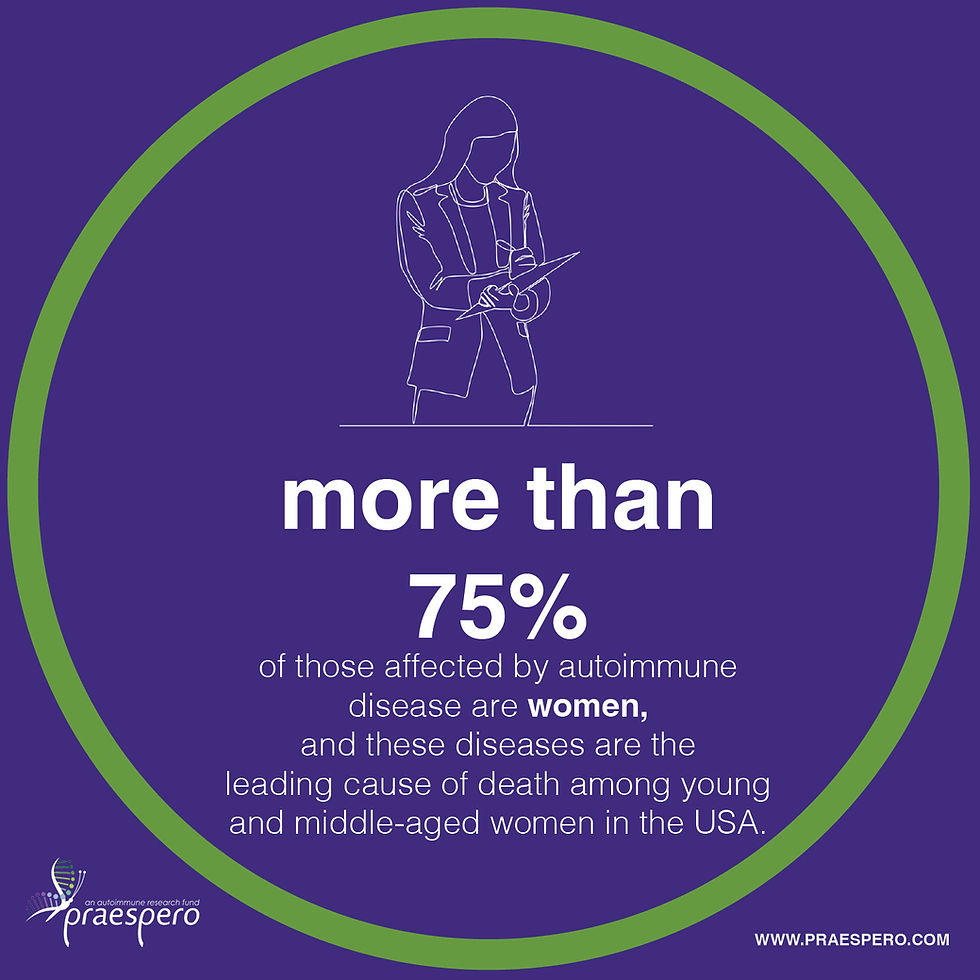
Graves’ disease and Hashimoto’s thyroiditis, both autoimmune conditions, are among the most common thyroid diseases, and women are significantly more likely to be diagnosed with them (8).
Hashimoto's happens when the thyroid is underactive, and fails to produce enough of its essen-tial hormones (T3 and T4). This autoimmune condition is the leading cause of hypothyroidism. It attacks the thyroid, leaving patients (mostly women) feeling tired, cold, and sluggish, while adversely impacting weight, mood, memory, and digestion.

"You struggle to get yourself a drink or some food, if you even have the appetite for it," Rachel shares. "You struggle to type on your computer because your fingers individually hurt and your hands are weak. When the phone rings, your heart stops with the shock of a loud noise. Your reflexes are poor, and your arms absolutely aching, with this heaviness that’s like having weights tied to them, but you manage to answer the phone. You forget for a second what you’re supposed to say, then you muster up a 'Hello, ___ speaking. How can I help you?' It comes out quiet and often croaky. You feel drained already and it’s only 9am. You’re exhausted in every inch of your body. Your fingers are heavy and stiff."
In the US there are 10-14 million people like Rachel living with Hashimoto's.
In Canada, 1 in 10 people struggle with a thyroid disorder. Hashimotos in particular is challenging for patients because the average diagnosis delay is 10 years.
The Thyroid Foundation of Canada notes that for many women, thyroid disease can feel invisible. “It tends to feel invisible because it is often explained away,” the foundation wrote in its Thyroid Awareness Month “Women and Thyroid” campaign (9).
The explanations are familiar: stress, aging, postpartum recovery, menopause, anxiety, depression and “just hormones.”
The foundation describes what diagnostic delay can feel like in real life: “years of symptoms, unanswered questions, self-doubt, and the exhausting work of trying to be believed.” By the time many women reach the workplace with a diagnosis, they have already spent years proving that something is wrong.
The economic burden is significant.
Hashimoto’s often develops between ages 30 and 50, a stage of life when many people are carrying major career, family, caregiving, and financial responsibilities.
In the U.S., hypothyroidism-related direct medical costs are estimated at $460 to $2,555 per patient per year, and the total annual economic burden of hypothyroidism has been estimated between $384 million and $2.1 billion, depending on the cost model used. Hypothyroidism is also associated with higher healthcare use, absenteeism, and short- and long-term disability costs among employed patients.

In Rachel's case, a supportive workplace made all the difference, and helped to alleviate the impacts of the disease.
"I’m lucky that my workplace were so understanding," she shared. "Whenever I needed a day or two off, we made a plan. Colleagues would call or text me to check I was OK, and even the director called me to give me some words of support and comfort."
Rachel notes that a supportive work environment is key to getting the most out of an employee with thyroid disorder. This includes accommodating the need for employees to see specialists, go to blood tests or other appointments that often happen during work hours.
Why lupus is a revealing in the workplace
Systemic lupus erythematosus (SLE), commonly called lupus, is a chronic autoimmune disease in which the immune system attacks the body’s own healthy tissue, causing joint pain, skin rashes, organ damage and neurological complications (1). It is a strong case study because it combines everything that keeps autoimmune disease hidden: symptoms that fluctuate without warning, few outward signs and fatigue that rest does not fix.

A meta-analysis cited in the study found that 67 to 90 percent of people with lupus experience debilitating fatigue, and an earlier survey found that 40 to 45 percent could not sustain employment because of fatigue and fluctuating symptoms (1). Depression and anxiety are also about twice as common in people with lupus as in the general population (1).
The study, titled “Invisible battles: the disability paradox and workplace experiences of individuals with lupus,” was published in Frontiers in Public Health. Armand Bam of Stellenbosch Business School in South Africa and colleagues interviewed six people with lupus about work, fatigue and mental health (1). The participants, identified in the paper by first name, show how fatigue and mental health feed each other:
Kim, 38, was diagnosed at 23 and has relied on public healthcare. She described fatigue that “never goes away even if you have 20 hours of sleep,” and found it hard to convey at work because, in her words, “people just don’t understand.”
James, 41, was diagnosed at 28. He told colleagues his exhaustion came from “working too hard” and pushed on until burnout. “I wanted to go to work, I needed to go to work,” said James, who also described living with “the face I show and the face I hide.”
Karen, 53, was diagnosed at 28 and built a demanding career. She took her laptop into hospital because there was a job to do. “Lupus is a very lonely disease,” said Karen.
Debbie, 35, was diagnosed at 21. After a flare left her unable to get out the door for work, she called her parents for help. Working remotely on a more flexible schedule later let her “finish work at my own pace.”
Erica, 43, was diagnosed at 36 after years of unexplained symptoms and being dismissed by doctors. Even lifting her arms became hard “because you are so tired,” and when she could work half days, she said, “it worked out for my good.”
Trish, 57, was diagnosed at 37. Her manager’s empathy stood out. Trish recalled her manager saying, “If you don’t feel well don’t come to the office; you can work from home.”
The disclosure paradox
The researchers point out that moments of relief like Trish’s depended on the discretion of individual managers rather than formal policy, so support was uneven and could vanish with a change of manager (1).
Participants also faced what the authors call a disclosure paradox: revealing a condition may unlock accommodations, but it also risks stigma and career setbacks. Many chose to perform wellness instead.
The disclosure paradox: revealing a condition may unlock accommodations, but it also risks stigma and career setbacks.
The authors conclude that responsibility should shift from individuals managing their symptoms to workplaces creating adaptable environments (1). With only six participants, the study offers a rich portrait of lived experience rather than a measure of how common it is, but it echoes what Praespero hears across autoimmune disease.
How to advocate for yourself at work with an invisible illness
Describe the impact on your work, not just the tiredness. Autoimmune fatigue is not relieved by rest, so explain what it changes: concentration, stamina, speed and the tasks that become harder.
Keep a record of symptoms and their effect on your work. Note every symptom, even ones that seem unrelated. It supports your case for accommodations and helps doctors connect the dots, and a second or third opinion is reasonable if your symptoms are dismissed as stress (2).
Ask for the arrangement that works, and ask for it to be formalized. Half days, remote work and flexible schedules helped Erica and Debbie. Trish’s experience shows why a written arrangement matters more than a sympathetic manager.
Decide what you share. You can describe the support you need without naming a diagnosis (7).
Protect your mental health. Debbie described doctors and psychologists working together on her care. Lupus and low mood can reinforce each other, so treat both.
Find one person you can be honest with. Several participants described carrying “the face I show and the face I hide.” One trusted colleague, friend or peer group can lighten that load.
Know your benefits and your rights. Review short-term and long-term disability options before a flare (7). Canadian human rights law generally requires employers to accommodate disability up to the point of undue hardship.
How managers can create a better workplace for employees with invisible illness
The study’s authors propose five practices that move accommodation from a favour to a standard (1). Together with other workplace guidance, they translate into steps any manager can take.
Evaluate performance in a way that allows for flares. Judge outcomes over time rather than energy on a given day, so fluctuation is not mistaken for unreliability (1).
Put accommodations into policy. Support should not depend on who happens to be a person’s manager. Build flexible hours, remote options and adjusted workloads into standard operations (1).
Adapt the physical and digital workspace. Quiet or low-stimulation spaces, adjustable lighting, ergonomic equipment and voice-to-text tools can reduce strain (7).
Communicate with energy in mind. Offer written updates alongside meetings, realistic deadlines and the option to reschedule on high-fatigue days (1).
Train leaders on invisible disabilities. Training should cover how to hold empathetic conversations and make clear that disclosure is a personal choice no manager should pressure (1, 7).
Make disclosure safe. Clear, equitable disclosure policies let employees ask for help without fear of professional consequences (1).
Support mental health and peer connection. Access to psychological support and employee resource groups can reduce the isolation many people with chronic illness describe (1, 7).
Making the invisible visible
Lupus and Hashimotos shows how much hangs on being believed. The people in these stories did not lack ambition. Some of them lacked workplaces built for illness that comes and goes. Breaking the cycle takes understanding at the desk and discovery at the bench. Praespero funds bold, collaborative research that looks for the root causes of autoimmune disease, because understanding why the immune system loses its balance is the surest path to prevention and cures, not only symptom management.
Together, we can accelerate the science to end autoimmune disease. Share this post with a colleague, a manager or a friend, and consider supporting boundary-breaking research at Praespero.org.
References
Bam A, Kilbride L, Ronnie L. Invisible battles: the disability paradox and workplace experiences of individuals with lupus. Front Public Health. 2026;14:1781849. doi:10.3389/fpubh.2026.1781849
Benaroya Research Institute. Diagnosing autoimmune diseases [Internet]. Seattle (WA): Benaroya Research Institute; [cited 2026 Oct 19]. Available from: https://benaroyaresearch.org/blog/diagnosing-autoimmune-diseases
Swansea University. Up to 40 years to get diagnosed with lupus: research highlights devastating impact of delays on patients [Internet]. Swansea: Swansea University; 2025 [cited 2026 Oct 19]. Available from: https://iss-www-00.swansea.ac.uk/press-office/news-events/news/2025/06/up-to-40-years-to-get-diagnosed-with-lupus-research-highlights-devastating-impact-of-delays-on-patients--.php
Diagnostic delays linked to greater disease activity, worse quality of life in Sjögren disease. AJMC [Internet]. 2026 Oct 9 [cited 2026 Oct 19]. Available from: https://www.ajmc.com/view/diagnostic-delays-linked-to-greater-disease-activity-worse-quality-of-life-in-sj-gren-disease
Jayasooriya N, Baillie S, Blackwell J, Bottle A, Petersen I, Creese H, et al. Systematic review with meta-analysis: time to diagnosis and the impact of delayed diagnosis on clinical outcomes in inflammatory bowel disease [Internet]. London: St George’s, University of London; [cited 2026 Oct 19]. Available from: https://openaccess.sgul.ac.uk/id/eprint/115143
Women with autoimmune diseases are less likely to be believed than men and face longer diagnostic delays. MDLinx [Internet]. [cited 2026 Oct 19]. Available from: https://www.mdlinx.com/news/women-with-autoimmune-diseases-are-less-likely-to-be-believed-than-men-and-face-longer-diagnostic/6npIDGjPlclWDZBbWjFYkR
Sundermeyer Z. Autoimmune disorders & invisible illness in the workplace. Infusion Health [Internet]. 2026 Jul 27 [cited 2026 Oct 19]. Available from: https://infusionhealth.org/autoimmune-disorders/autoimmune-disorders-invisible-illness-in-the-workplace/
University Health Network. What to know about thyroid health [Internet]. Toronto: University Health Network; [cited 2026 Oct 19]. Available from: https://www.uhn.ca/corporate/News/Pages/what-to-know-about-thyroid-health.aspx
Thyroid Foundation of Canada. “Women and Thyroid” campaign, Thyroid Awareness Month [Internet]. Bath (ON): Thyroid Foundation of Canada; [cited 2026 Oct 19]. Available from: https://www.thyroid.ca


Comments