


Innovation Awards
INNOVATION AWARDS:
Awarding biomedical & medical research funding for novel projects.

DID YOU KNOW?
We've distributed over $6.5 million to over 30 research projects since Praespero was launched.

THE SPARK
It’s the spark that lights the fuse. It’s the fuse that leads to an explosion of innovation.
But it all starts with a spark – an Innovation Award.
Innovative medical research requires taking risks. We fund unconventional opportunities. The results can have a chain reaction effect, leading to breakthroughs in the field!
Read examples of chain reaction stories here.
LAUNCHING CHAIN REACTIONS - ONE REWARD AT A TIME
Following a rigorous set of criteria, our Scientific Advisory Board selects award recipients to receive awards of up to $150,000 CAD for “novel research” that punches outside the box.


“Current funding structures are very safe and risk averse. But Praespero is adventurous and innovative. They support us to ask the tricky questions and give us the tools to be able to take a big jump instead of moving in incremental steps.”
- 2024 Innovation Award Winner, Lisa Osborne, Osborne Lab, UBC
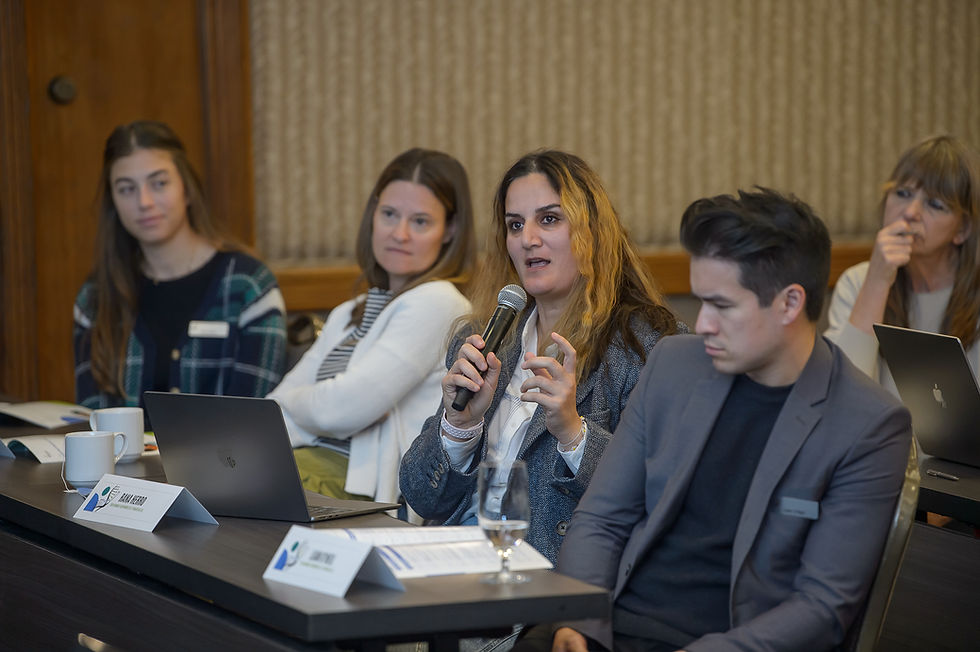

“The Innovation Award helped us establish proof of concept and bring preliminary data to compete for federal funds and bring this idea to patients. It also helped us form a new generation of scientists so that we can continue our fight for life without disease.”
2022 Innovation Award Winner Rana Herro, Cincinnati Children’s Hospital
THE BREAKTHROUGHS
Meet our Innovation Award Recipients.
Fotini Gounari, PhD, and Khashayarsha Khazaie, PhD, for their collaborative research on the mechanistic insight into de-regulation of inflammation and immunity by Tregs and microbiota.
2018
Juan Carlos Zúñiga-Pflücker, PhD, for his research on the generation of tissue-specific regulatory T Cells for adoptive immune tolerance.
2018
Dean Tantin, PhD, for his research on the genetic and pharmacological targeting of OCA-B in autoimmunity.
2018
Maria Bettini, PhD for her research on exploiting regulatory T cell functions for treatment in autoimmunity.
2019
Edwin Wan, PhD and Vanja Lazarevic, PhD, for their collective research on the novel function of NKp46+ innate lymphoid cells in CNS inflammation and autoimmunity.
2019
Eric Meffre, PhD, for his research on Inhibiting autoreactive B cell production in autoimmune diseases.
2019
Rana Herro, PhD for her research on allergy, an atopic march towards autoimmunity.
2022
Eric Huseby, PhD for his research on fate-mapping T cell responses in type-1 diabetes.
2022
Marc Horwitz, PhD, for his research on virus-enhanced age-associated B cells mediate commonalities in autoimmune disease pathology.
2022
Jennifer Gommerman, PhD, for her research on mining for microbial metabolites that stave off MS progression.
2022
Wan-Lin Lo, PhD for her research on tailoring NFAT signaling in Treg cells to optimize immune tolerance.
2023
Greet Verstichel, MD, PhD for her research targets that impact pre-TCR control in autoimmune disease.
2023
Sue Tsai, PhD for her research on early life determinants of type-1 diabetes.
2023
Alessandra Franco, PhD for her research on how Treg cells control autoimmunity and prevent clinical relapses in rheumatoid arthritis.
2023
Nunzio Bottini, PhD, and Richard Ainsworth, PhD for their research on Treg instability in rheumatoid arthritis.
2023
Liam O’Neil, MD, MHSC, FRCPC for his research on investigating the role of mucosal citrullination and autoantibody formation in cigarette smoke driven collagen-induced arthritis.
2024
Lisa Osborne, PhD for her research on identifying helminth-induced type 2 neuro-immune interactions that modulate sex-specific disease outcomes in mouse models of multiple sclerosis.
UofC
2024
Jeffrey Hubbell, PhD for his research on interleukin-35 for the treatment of rheumatoid arthritis.
UofC
2024
Andrew Mason, MBBS, FRCPI for his prevalence studies of human betaretrovirus in autoimmune disorders.
UofC